

Finding Balance in a Connected World: Social Media & Self-Esteem
Sometimes it feels like everyone but you has it all together. With so much room for comparison online, it’s easy to feel like you’re falling behind.
Social media has become a part of daily life for many teens today, it is how you connect, share with friends and, these days, how you may find out what is happening in the world. With ever growing platforms like Instagram, TikTok and Snapchat, you have access to spaces where you can curate your feed, express your creativity and “doom scroll” as I like to call it. Despite all the fun uses of social media, it also creates space for comparison, challenges with confidence, self-esteem and overall mental wellness. Finding a balance between being online and living offline can make a huge difference in how you move through the world and feel about yourself.
Comparison Culture and Self-Esteem
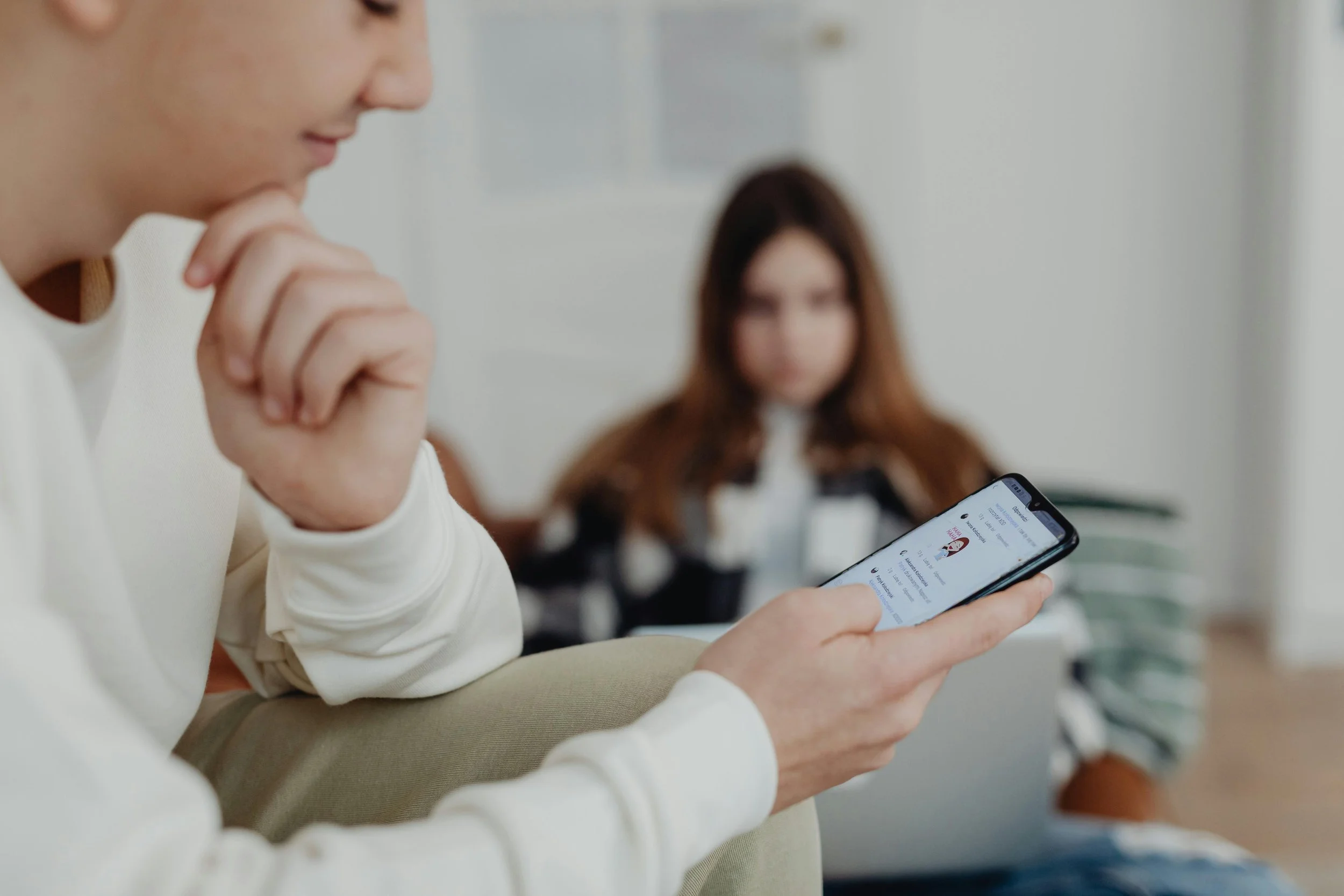
When we scroll through social media, it is important to remember we see highlights of everyone’s best moments. Photos that look perfect, another exciting trip or new experiences, it can be easy to forget that what we see online is not usually everyday life. I know when I share on my personal pages, I am putting my best foot forward or sharing special memories. When you start to compare your day-to-day life, to someone’s curated feed, it is easy to feel discouraged or feel that you aren’t living up to your expectations.
Teens often fall into the comparison trap, comparing themselves to influencers or their peers. These behaviours are often linked to lower self-esteem and increased feelings of anxiety and depression as studies have shown that teens often express feeling pressure to act and/or look a certain way in order to fit in or receive likes online [1][7]. This can create a cycle where self-worth and self-esteem become tied to likes rather than genuine confidence and connection in real life. Additionally, teens may invest a great deal of time and energy in social media, whether it’s doom scrolling or finding meaningful connection, the sheer number of hours can negatively impact sleep quality and restfulness [7]. Recently it was found that more than one in ten teens show signs of problematic social media use, where it feels challenging to disengage and feel they experience withdrawal when they can’t engage online [6].
As you navigate online platforms, it is important to remember that what is posted is not the full picture, but a small piece of it.
Social Media, Is it addictive?
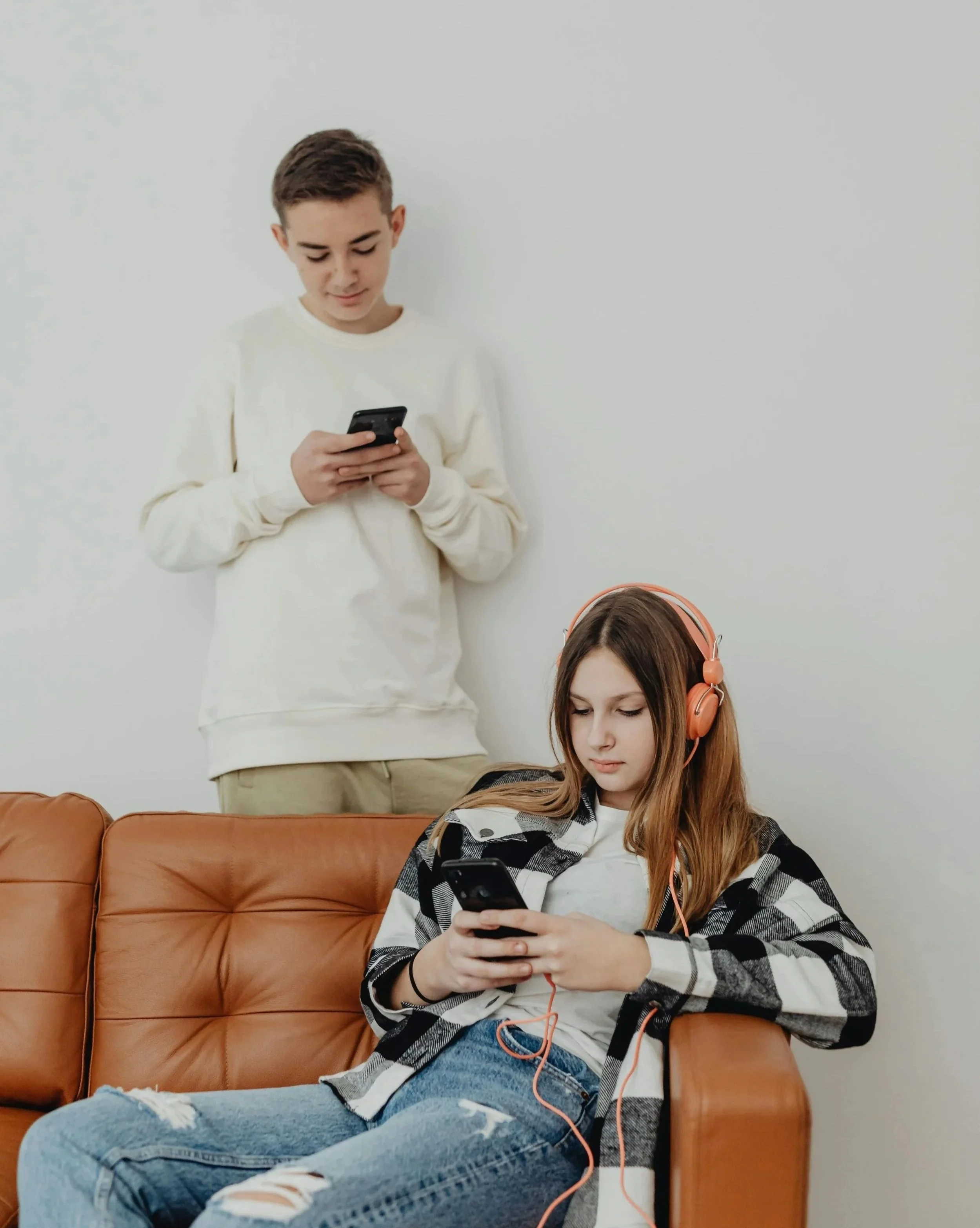
Have you ever promised yourself “just five more minutes”, then you look up and realize more than an hour has passed? Well you aren’t alone, it isn’t a lack of willpower, that is how social media is designed. Social media platforms like TikTok are built to keep you engaged by curating personal feeds that keep the dopamine coming. Checking social media can feel compulsive, each notification, like or interaction encourages you to keep scrolling and checking for more [5]. With continued use, that consistent stimulation may impact focus, sleep or your ability to engage in meaningful interaction online.
One study found that teens who spend over three hours a day on social media are about twice as likely to experience symptoms of depression and anxiety [4]. Another explored that over half of teen surveys expressed disruption to their sleep and productivity [2]. Sleep is important for teens, poor sleep can make it harder to regulate your mood and can contribute to a cycle of “doom scrolling”. Recognizing that social media is intentionally designed to pull you in can help you feel more in control. You can still enjoy connecting with friends and watching your favourite creators online, just with more awareness that social media is not always reality.
Finding Balance and Setting Healthy Boundaries
Finding balance doesn’t mean giving up social media, it means learning how to engage in a way that supports your overall mental wellbeing. After all as we’ve talked about, social media can help you find community, keep up to date on news and express yourself creatively [3]. For those who feel isolated or disconnected offline, social media can serve as a lifeline to people who may understand what they are going through, or a way to find new connections. Setting healthy boundaries with social media allows you to give your brain a rest when needed, while finding ways to engage in meaningful ways but online and offline.
Here are five ways you can support yourself in finding balance and setting healthy boundaries:
-
Create periods of “phone free” time. We would encourage doing so before bed, during meals, or while doing homework. Short breaks from screens can help you feel more rested and focused.
Quick tip: If you find you struggle with setting your phone down, many allow you to set up app permissions that only allow a certain amount of hours a day! That way you can keep your phone on you, but not engage online.
-
Your social media feed should feel good, uplift you and/or inform you, not make you question your self-worth. If someone’s content triggers comparison, or overall just doesn’t feel good, it’s okay to step back from their profile.
-
Before opening one of your social media apps, ask yourself, “What am I coming here for?” Whether you are checking in with a friend or watching a reel that makes you laugh, be mindful of what you are using social media for.
-
Make time for your hobbies, exercise, and connections offline. In person interactions can help you engage and build confidence in different ways than online can. However, if online time if important to you, than give yourself time to engage. Try setting aside specific time periods for both online and offline time.
-
If you’re feeling overwhelmed, it is important to talk about it. Whether you chat with a parent, teacher or therapist, a trusted adult can help you navigate boundary setting and explore what is troubling you. You’re not alone, many teens struggle with feeling “stuck”.
Final Thoughts
Social media can be a fun and creative part of your day, as long as you’re intentional with your use!
Overall, social media isn’t going anywhere! As long as you are moving through online spaces with a little awareness (such as taking breaks when you need them, following accounts that make you feel good, and spending time offline doing things you enjoy), you can still scroll and engage with your favourite posts without feeling overwhelmed. Finding balance is never about perfection, it’s about enjoying online spaces while staying grounded in your real life.
-
[1] Ehmke, R. (2025, June 20). How using social media affects teenagers. Child Mind Institute. https://childmind.org/article/how-using-social-media-affects-teenagers/
[2] Faverio, M., Anderson, M., & Park, E. (2025, April 22). Teens, social media and mental health. Pew Research Center. https://www.pewresearch.org/internet/2025/04/22/teens-social-media-and-mental-health/
[3] Mayo Clinic. (2022, February 26). Teens and social media use: What’s the impact? Mayo Foundation for Medical Education and Research. https://www.mayoclinic.org/healthy-%20lifestyle/tween-and-teen-health/in-depth/teens-and-social-media-use/art-20474437
[4] Riehm, K. E., Feder, K. A., Tormohlen, K. N., Crum, R. M., Young, A. S., Green, K. M., Pacek, L. R., La Flair, L. N., & Mojtabai, R. (2019, September 11). Associations between time spent using social media and internalizing and externalizing problems among US youth. JAMA Psychiatry, 76(12), 1266–1273. https://doi.org/10.1001/jamapsychiatry.2019.2325
[5] Weir, K. (2023, September 1). Social media brings benefits and risks to teens: Here’s how psychology can help identify a path forward.Monitor on Psychology, 54(6). American Psychological Association. https://www.apa.org/monitor/2023/09/protecting-teens-on-social-media
[6] World Health Organization Regional Office for Europe. (2024, September 25). Teens, screens and mental health: New WHO report indicates need for healthier online habits among adolescents [Media release]. https://www.who.int/europe/news/item/25-09-2024-teens--screens-and-mental-health
[7] Woods, H. C., & Scott, H. (2016, June 11). #Sleepyteens: Social media use in adolescence is associated with poor sleep quality, anxiety, depression and low self-esteem. Journal of Adolescence, 51, 41–49. https://doi.org/10.1016/j.adolescence.2016.05.008
